Negative pressure is the cornerstone of effective duct cleaning. Imagine a powerful vacuum cleaner designed for your entire ventilation system. That's essentially what negative pressure duct cleaning achieves. Specialized equipment creates a vacuum within the ductwork, drawing out dust, debris, allergens, and other contaminants that accumulate over time. This controlled suction ensures that pollutants are pulled away from your living or working spaces, preventing them from recirculating and compromising indoor air quality.
Why is this important? Clean air ducts are directly linked to a healthier indoor environment. Over time, ductwork becomes a breeding ground for mold, bacteria, and dust mites, all of which can trigger allergies, asthma, and other respiratory problems. Poor indoor air quality can also lead to fatigue, headaches, and reduced concentration, impacting employee productivity and overall well-being. By removing these contaminants, negative pressure duct cleaning significantly improves the air you breathe, creating a healthier and more comfortable environment for everyone.
Investing in regular duct cleaning is an investment in the health and productivity of your workforce. It's a proactive measure that can reduce sick days, improve employee morale, and contribute to a more sustainable and healthy workplace.
If your vents haven't been checked in over a year, Rotary brush vs air whip tools in real homes for long-term efficiency and cleaner breathing at home.. When regular vacuuming no longer does the trick, affordable duct cleaning in Calgary is a simple yet powerful way to cut down on dust and allergens indoors..Is your building's air quality suffering? Several telltale signs can indicate that your ductwork needs professional cleaning. One of the most obvious is visible dust buildup around vents and registers. If you notice excessive dust accumulating shortly after cleaning, it's a strong indicator that your ducts are harboring significant amounts of debris.
Beyond visible dust, pay attention to the health of your employees. An increase in allergy symptoms like sneezing, coughing, and irritated eyes can be directly linked to dirty air ducts. Mold, pollen, and dust mites accumulating within the ductwork can be circulated throughout the building, exacerbating respiratory issues and impacting employee well-being and productivity.
Key Indicators for Duct Cleaning:
Furthermore, your HVAC system's performance can offer clues. If you've noticed a recent spike in energy bills without a corresponding change in usage habits, dirty ducts could be the culprit. Dust and debris restrict airflow, forcing your system to work harder to maintain the desired temperature. This inefficiency not only increases energy consumption but also puts undue stress on the HVAC system, potentially leading to premature failure and costly repairs. Uneven heating or cooling throughout the building can also point to airflow obstructions caused by dirty ducts. Addressing these issues promptly through professional duct cleaning can improve air quality, reduce energy costs, and extend the life of your HVAC system.
Prior to commencing any duct cleaning activities, it is crucial to inform all building occupants about the scheduled work. This notification should include the dates and times of the cleaning, the areas that will be affected, and any potential disruptions, such as noise or temporary relocation requirements. Clear communication minimizes anxiety and allows occupants to prepare accordingly, safeguarding sensitive materials or making alternative work arrangements if necessary. Moreover, informing occupants demonstrates a commitment to their well-being and fosters a cooperative environment throughout the cleaning process.
Protecting sensitive equipment is paramount before initiating duct cleaning. Electronic devices, computers, and other delicate machinery should be covered or removed from the immediate vicinity of the vents to prevent dust or debris from causing damage. This precaution extends to covering furniture and other valuable items in the area. By taking these steps, businesses can minimize the risk of equipment malfunction or aesthetic damage, ensuring a smooth and cost-effective cleaning process. This proactive approach saves money and prevents unnecessary disruptions to daily operations.
Ensuring technician safety is a non-negotiable aspect of duct cleaning preparation. All technicians must be equipped with appropriate personal protective equipment (PPE), including respirators, gloves, and eye protection, to safeguard them from dust, allergens, and other potential hazards present in the ductwork. Regular breaks and hydration should be encouraged to prevent fatigue and maintain alertness. Furthermore, technicians should be thoroughly trained in safety protocols, including proper equipment handling and emergency procedures, to minimize the risk of accidents or injuries.
Implementing effective containment procedures is essential to prevent the spread of contaminants during duct cleaning. Sealing off the work area with plastic sheeting and using specialized equipment like HEPA-filtered vacuums helps to contain dust and debris, preventing them from circulating throughout the building. Proper ventilation should also be maintained to ensure that air quality remains within acceptable levels. By adhering to strict containment protocols, businesses can protect the health and well-being of their employees and maintain a clean and healthy indoor environment.
Before commencing the cleaning process, a thorough inspection of the ductwork system is necessary. This inspection helps identify any pre-existing damage, such as leaks or corrosion, which could be exacerbated by the cleaning process. It also allows technicians to determine the extent of the contamination and select the most appropriate cleaning methods. By conducting a comprehensive system inspection, businesses can ensure that the cleaning process is tailored to the specific needs of their building, maximizing its effectiveness and minimizing the risk of damage.
The first crucial step in negative pressure duct cleaning is a thorough inspection. This isn't just a quick glance; it's a detailed assessment of your entire ductwork system to pinpoint areas of concern and understand the level of contamination. We utilize specialized tools, most notably fiber optic cameras, to navigate the intricate network of ducts and provide a real-time view of the interior.
These cameras are equipped with powerful lights and flexible probes, allowing us to see deep inside even the most inaccessible sections of your ductwork. This visual inspection helps us identify the type and amount of debris present, whether it's accumulated dust, mold growth, rodent droppings, or other contaminants.
The information gathered during this initial inspection is critical for developing a customized cleaning plan. By understanding the specific challenges and contamination levels within your ductwork, we can select the most appropriate cleaning methods and equipment to ensure a thorough and effective cleaning process. This detailed assessment also allows us to provide you with an accurate estimate of the cleaning costs and timeline.
Key Diagnostic Tools:
Beyond cameras, we also employ other diagnostic tools, such as moisture meters, to detect any hidden moisture that could be contributing to mold growth. We also assess the overall condition of the ductwork, looking for leaks, cracks, or damaged insulation that could compromise the system's efficiency and allow contaminants to enter.
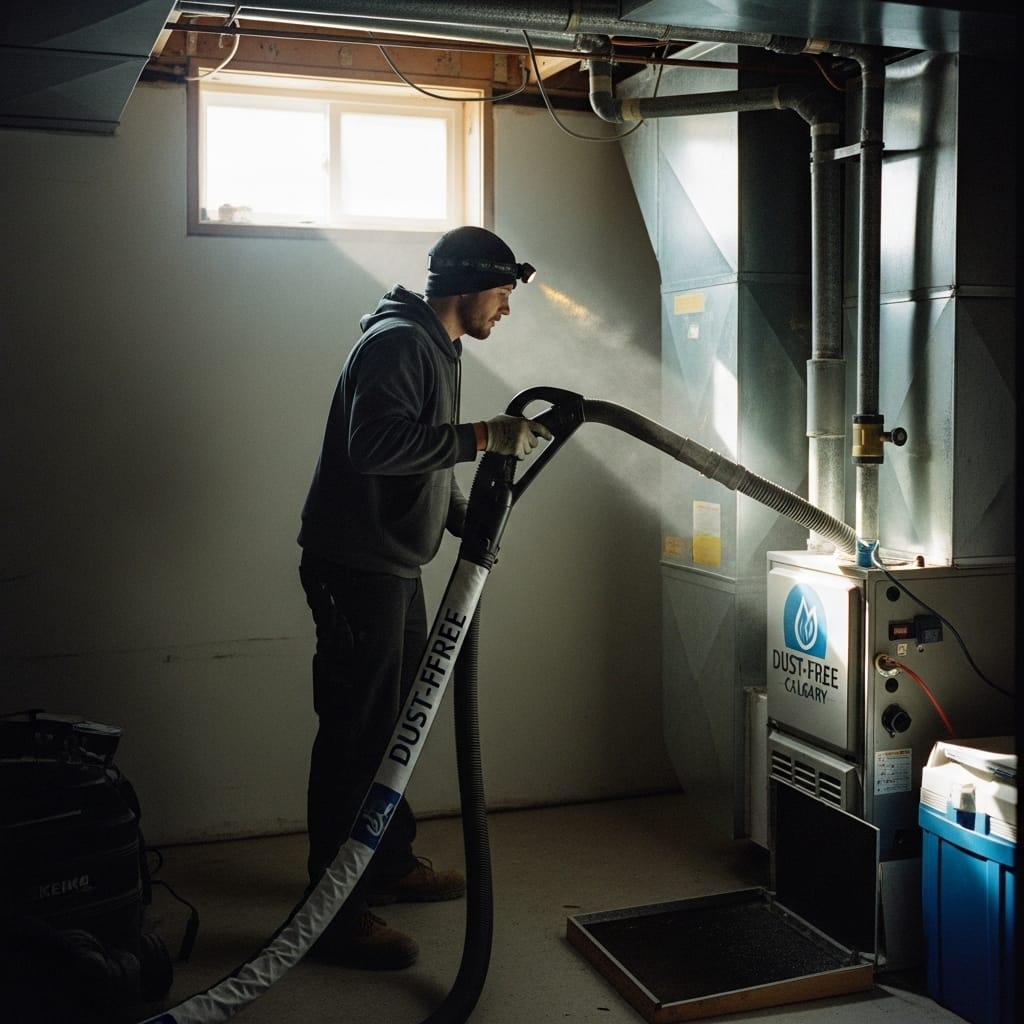
Before initiating the cleaning process, it's crucial to properly seal the ductwork system. This prevents dislodged contaminants from circulating throughout the building and compromising indoor air quality in unaffected areas. Begin by identifying all registers, vents, and return air grilles. Seal these openings securely with durable, airtight materials such as painter's tape and plastic sheeting. Ensure a complete seal to prevent any leakage during the cleaning process.
Next, strategically position the negative pressure machine. This powerful vacuum unit is the cornerstone of effective duct cleaning, creating a controlled airflow that draws contaminants out of the system. Connect the machine to the ductwork, typically near the furnace or air handler, using a specialized hose. Before powering on the machine, double-check all seals to confirm their integrity.
Key Considerations for Seal Integrity:
Once the seals are verified, activate the negative pressure machine. The machine will begin drawing air from within the ductwork, creating a vacuum effect. This negative pressure environment ensures that when contaminants are dislodged during the cleaning process, they are immediately drawn towards the vacuum unit and contained within its filtration system. This prevents airborne particles from escaping into the occupied spaces of the building, safeguarding the health and well-being of employees. Regularly monitor the pressure gauge on the machine to ensure optimal performance throughout the cleaning process.
The core of negative pressure duct cleaning lies in effectively dislodging and removing accumulated dust, debris, and contaminants from within the ductwork. This process relies on a combination of agitation techniques and the powerful suction of the negative pressure system.
Specialized tools are crucial for this stage. Rotating brushes, often made of nylon or other non-abrasive materials, are inserted into the ducts to scrub the interior surfaces, loosening dust and particles clinging to the walls. Air whips, flexible hoses with nozzles that emit bursts of compressed air, are also commonly used. These whips snake through the ductwork, dislodging debris in hard-to-reach areas with powerful blasts of air. For more stubborn buildup, mechanical brushes with adjustable speeds and directions can be employed.
Key Tools Used:
As these tools agitate and dislodge the contaminants, the negative pressure system, connected downstream, immediately draws the loosened debris into its collection unit. The powerful suction ensures that the dislodged particles don't simply settle elsewhere within the ductwork. Instead, they are pulled through the system and captured by high-efficiency particulate air (HEPA) filters, preventing recirculation of dust and allergens back into the building's air supply. This simultaneous agitation and extraction is what makes negative pressure duct cleaning so effective, ensuring a thorough and comprehensive cleaning process.
To ensure a truly comprehensive duct cleaning, it's crucial to address each component of your HVAC system individually. This goes beyond simply cleaning the main ductwork and involves meticulous attention to registers, vents, and the air handler itself.
Registers and vents, being the entry and exit points for airflow, often accumulate significant dust and debris. These should be removed and thoroughly washed with a suitable cleaning solution to eliminate accumulated dust and grime. A brush can be used to scrub away stubborn deposits, ensuring all surfaces are clean. Sanitizing these components after cleaning is also advisable to kill any lingering bacteria or mold spores.
Cleaning Checklist: Registers and Vents
The air handler, the heart of your HVAC system, requires a more specialized approach. This unit houses the blower fan, evaporator coil, and other critical components. The blower fan blades should be carefully cleaned to remove accumulated dust, which can reduce its efficiency and impact indoor air quality. The evaporator coil, responsible for cooling the air, is prone to mold and bacteria growth. It should be professionally cleaned and disinfected with specialized solutions that won't damage the delicate fins. Furthermore, the drain pan beneath the coil should be cleared of any standing water and treated with an algaecide to prevent future buildup. By meticulously cleaning each of these components, you ensure that the entire HVAC system is contributing to a healthier and more efficient indoor environment.
Following the duct cleaning, consider sanitizing the ductwork to eliminate any remaining bacteria, mold, or other microorganisms. While not always necessary, sanitization provides an extra layer of protection, particularly beneficial in environments with specific health concerns.
Several sanitization methods are available. One common approach involves using a fogging system to disperse a sanitizing solution throughout the ductwork. These solutions often contain antimicrobial agents designed to kill a broad spectrum of microorganisms. Another method involves applying a sanitizing coating directly to the interior surfaces of the ducts.
Safety First:
Safety is paramount when choosing and applying sanitization products. Ensure that the chosen sanitizers are EPA-registered and specifically approved for use in HVAC systems. Always follow the manufacturer's instructions carefully regarding dilution, application techniques, and ventilation requirements. It is crucial to ensure the building is adequately ventilated during and after the sanitization process to minimize exposure to residual chemicals. Occupants, especially those with respiratory sensitivities, should avoid the area during sanitization and for a specified period afterward, as recommended by the product manufacturer. Consider consulting with an expert to determine the most appropriate and safest sanitization method for your specific needs.
Following the cleaning process, a meticulous final inspection is crucial to guarantee the complete removal of contaminants. This involves a thorough visual examination of the entire ductwork system, utilizing tools like borescopes or cameras to access hard-to-reach areas. Technicians will look for any remaining dust, debris, mold, or other particles clinging to the duct surfaces. Additionally, they will inspect the components, such as registers, grills, and dampers, ensuring they are clean and functioning correctly.
Airflow testing may also be conducted to verify that the system is operating at its optimal efficiency. This helps identify any blockages or restrictions that may have been overlooked during the cleaning process. If any residual contamination is found, the affected areas will be re-cleaned until satisfactory results are achieved.
Once the ductwork is deemed clean, the focus shifts to sealing any remaining gaps or leaks. Over time, ductwork can develop cracks, holes, or loose connections, leading to energy loss and the re-entry of contaminants. Specialized sealants, such as mastic or foil tape, are used to close these openings, creating an airtight seal. This prevents conditioned air from escaping, improving energy efficiency and reducing utility costs. Sealing also prevents the infiltration of dust, allergens, and other pollutants, maintaining a healthier indoor environment. A final inspection of the sealed areas ensures the integrity of the repair and the overall effectiveness of the duct cleaning process.
A mold and mildew (US, PH) or mould (UK, CW) is just one of the frameworks that specific fungi can develop. The dust-like, colored look of molds is because of the formation of spores having fungal secondary metabolites. The spores are the dispersal systems of the fungis. Not all fungis form molds. Some fungi create mushrooms or ascomata; others grow as single cells, and are called microfungi (for instance, yeasts). A huge and taxonomically diverse variety of fungal types form molds. The development of hyphae leads to discoloration and a fuzzy look, especially on food. The network of these tubular branching hyphae, called a mycelium, is taken into consideration a single microorganism. The hyphae are typically transparent, so the mycelium looks like very fine, fluffy white threads over the surface area. Cross-walls (septa) may delimit linked areas along the hyphae, each including one or numerous, genetically the same centers. The dirty appearance of lots of mold and mildews is triggered by extreme manufacturing of nonsexual spores (conidia) created by distinction at the ends of hyphae. The setting of development and form of these spores is commonly used to classify molds. Much of these spores are tinted, making the fungus far more noticeable to the human eye at this phase in its life-cycle. Mold and mildews are microbes that do not develop a details taxonomic or phylogenetic grouping, however can be located in the divisions Zygomycota and Ascomycota. In the past, the majority of molds were classified within the Deuteromycota. Mold was the usual name for water molds or slime molds, which were formerly classified as fungi. Mold and mildews create biodegradation of all-natural materials, which can be undesirable when it becomes food wasting or damage to building. They likewise play important functions in biotechnology and food scientific research in the production of different pigments, foods, beverages, antibiotics, drugs and enzymes. Some conditions of animals and humans can be brought on by certain molds: illness may arise from allergic level of sensitivity to mold and mildew spores, from growth of pathogenic molds within the body, or from the results of consumed or inhaled harmful compounds (mycotoxins) generated by molds.
.Air flow, or air flow, is the movement of air. Air behaves in a fluid way, implying particles naturally stream from locations of higher stress to those where the stress is lower. Climatic air pressure is straight pertaining to elevation, temperature level, and make-up. In engineering, air flow is a dimension of the amount of air per unit of time that flows with a specific device. It can be described as a volumetric flow rate (quantity of air per unit time) or a mass circulation rate (mass of air each time). What connects both types of description is the air thickness, which is a function of stress and temperature with the perfect gas legislation. The circulation of air can be induced via mechanical means (such as by operating an electric or hand-operated follower) or can take place passively, as a feature of stress differentials present in the environment.
.